

If you’re an adult dealing with overlapping, twisted, or shifted teeth, you’ve probably wondered if clear aligners can really help. The short answer: yes. Is Invisalign good for adults with crowded teeth? For most mild to moderate cases, it’s an excellent option. At Rise + Smile Orthodontics, Dr. Mathue Faulkner guides adults through this exact question every week, and the results speak for themselves.
Let’s break down how Invisalign for crowded teeth actually works, who it fits best, and what to expect from your experience.

What Counts as Crowded Teeth in Adults?
Yes, Invisalign treats most mild to moderate adult crowding. Crowding happens when your jaw doesn’t have enough room for all your teeth, causing them to overlap, rotate, or twist out of place. Clear aligners can gently guide these teeth back into proper position, often without extractions, by combining customized movement with small space-creating techniques.
Orthodontists usually sort crowding into three levels:
- Mild: less than 3 mm of space shortage
- Moderate: 3 to 6 mm of space shortage
- Severe: more than 6 mm of space shortage
Many adults notice their teeth getting more crowded as they age, even if they had braces as a kid. This often happens because of natural jaw narrowing, retainer slip-ups, or shifting from a lost tooth. Crowded teeth aren’t just a cosmetic concern. Tight spaces trap plaque, make flossing tough, and can raise your risk of cavities and gum disease over time.
At Rise + Smile Orthodontics, your first-time visit includes a thorough review of your crowding so you know exactly where you stand. You’ll also learn how your bite, jaw shape, and oral habits play into the picture, giving you a full understanding before any decisions are made.
How Invisalign Shifts Crowded Adult Teeth
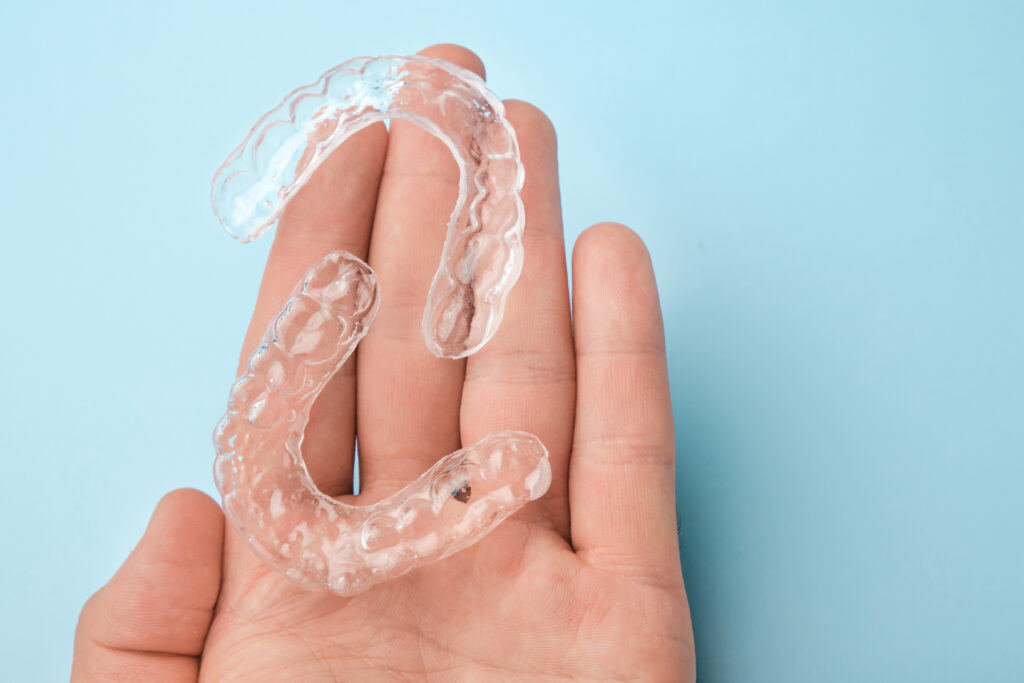
Invisalign uses a series of clear, custom-made aligners that gradually move your teeth into their new positions. Each set is worn 20 to 22 hours a day and swapped out every one to two weeks. The process is quiet, discreet, and designed around your daily life.
Here’s how your clear aligners work on crowded teeth:
- Digital scan and smile blueprint. Dr. Faulkner uses a 3D scanner to map your current bite and plan every movement. You’ll see a preview of your dream smile before you begin.
- Custom aligners arrive. Each tray is slightly different from the last, applying gentle pressure to shift teeth into alignment.
- Attachments add grip. Tooth-colored bumps are sometimes bonded to specific teeth, giving the aligners something to hold onto for rotating stubborn teeth.
- Interproximal reduction (IPR) creates room. For mild to moderate crowding, Dr. Faulkner can polish tiny amounts of enamel between teeth to open space, avoiding extractions in many cases.
- Check-ins every 6 to 10 weeks. You’ll stop by the office so we can track progress and hand off your next set of trays.
For severe crowding, extractions may still be needed. Dr. Faulkner will walk you through all options during your free consult.
Benefits of Invisalign for Adults with Crowded Teeth
Clear aligners offer real advantages for adults, especially those balancing work, social life, and family. Below are the questions adults ask most often about the perks of going clear.
How Discreet Are Clear Aligners at Work and Social Events?
The clear plastic trays blend in whether you’re in a meeting, giving a presentation, or out with friends. Most people won’t notice you’re wearing them. That subtle look is a huge reason adults choose Invisalign over metal braces, especially when a professional appearance matters day in and day out.
Can You Eat and Clean Normally with Invisalign?
Yes. Take the aligners out to eat whatever you want, then brush and floss normally without threading around brackets or wires. Because you can clean your teeth without obstacles, plaque buildup drops. That lowers your long-term risk of cavities and gum issues, which matters even more as you age.
What Other Advantages Do Adults Notice?
- More even bite distribution. As crowded teeth move into alignment, your bite forces spread out evenly, protecting your enamel from the uneven wear that comes with overlapping teeth.
- Smooth and comfortable. No metal brackets rubbing against your cheeks or lips. The aligners sit flush against your teeth.
- Fewer office visits. Clear aligners often need less chair time than metal braces, a huge plus for busy adults.
- Predictable results. Digital planning lets you see your projected outcome before you start, so there are no surprises.
Adults who choose Invisalign at Rise + Smile Orthodontics often tell us the biggest win is confidence. You get to go about your day without feeling self-conscious about your smile transformation.
Invisalign vs. Braces for Adult Crowding
Both Invisalign and braces can straighten crowded teeth beautifully. The right choice depends on your case, your lifestyle, and how committed you are to wearing aligners consistently. Rise + Smile Orthodontics offers Invisalign, metal braces, and clear braces, so Dr. Faulkner can match you with what truly fits your needs.
Here’s a quick side-by-side look:
| Feature | Invisalign | Metal/Clear Braces |
|---|---|---|
| Best for | Mild to moderate crowding | Moderate to severe crowding, complex bites |
| Appearance | Nearly invisible | Visible (clear braces less so) |
| Removable | Yes | No |
| Average treatment time | 6 to 18 months | 12 to 24 months |
| Office visits | Every 6 to 10 weeks | Every 4 to 8 weeks |
| Food restrictions | None (trays come out) | Yes (avoid sticky, hard foods) |
| Compliance required | High (20 to 22 hrs/day) | Built-in, always working |
| Comfort | Smooth plastic | Brackets and wires |
For adults with severe rotations, deep bite issues, or complex skeletal concerns, braces sometimes offer more precise control. Dr. Faulkner will give you an honest recommendation based on what works best for your smile, not just what sounds trendy. He takes the time to walk through pros and cons of each option so you feel confident in your path forward.
Who Is (and Isn’t) a Good Candidate
Not every adult is a perfect fit for Invisalign, but many more are candidates than they realize. Here’s a straightforward look at who tends to do well, and who might need a different approach.
You’re likely a good candidate if:
- You have mild to moderate crowding
- Your gums and teeth are healthy
- You can commit to wearing trays 20 to 22 hours a day
- You’re ready to swap aligners on schedule
- Your bite is generally stable, with minor issues at most
Invisalign may still work with extra planning if:
- You have moderate rotations that need attachments
- You have mild bite issues alongside crowding
- You’ve had prior orthodontic work and need refinement
Invisalign isn’t ideal if:
- You have severe skeletal bite issues that need jaw correction
- You have active gum disease that must be treated first
- You can’t commit to the 20 to 22 hour daily wear time
- You have extensive crowns, bridges, or implants that limit tooth movement
Adults with prior restorative work can still often qualify. It just needs a case-by-case review. Dr. Faulkner will do a full exam and digital scan to confirm your candidacy, taking the time to answer every question you bring to the visit. You’ll leave your free consult knowing exactly what’s possible for your smile and feeling clear on next steps.

Frequently Asked Questions
Can I get Invisalign if I have crowded teeth?
Yes, Invisalign works well for most adults with mild to moderate crowding. Clear aligners can rotate, tip, and shift teeth into alignment, often with the help of small attachments or interproximal reduction to create space. Severe crowding may still need Invisalign combined with other techniques, or metal braces for best results.
What disqualifies you from Invisalign?
A few things can rule out Invisalign. Severe skeletal bite issues that require jaw correction, active gum disease, and the inability to wear trays 20 to 22 hours a day are the most common disqualifiers. Extensive restorative work like multiple crowns or implants can also limit movement. A thorough check-up with Dr. Faulkner will give you a clear answer.
What is the biggest complaint with Invisalign?
The most common complaint is the wear time commitment. You have to keep trays in 20 to 22 hours a day, which means removing them only for meals and brushing. Some adults also notice a brief speech adjustment during the first few days of wearing new aligners. Both tend to feel natural within a week or two.
How long does Invisalign take for crowded teeth?
Most adults complete treatment in 6 to 18 months, depending on how much crowding needs correcting. Mild cases can wrap up in under a year, while moderate cases usually take 12 to 18 months. Consistent wear is the biggest factor in staying on schedule, so building a daily routine around your trays really pays off.
Do I need extractions for crowded teeth with Invisalign?
Often, no. Dr. Faulkner uses interproximal reduction (IPR) to gently create small amounts of space between teeth, avoiding extractions in many cases. Severe crowding may still require extractions to achieve a healthy, lasting result. Your digital scan will show exactly what your case needs, and Dr. Faulkner will talk you through every option so you feel confident in the plan. Let’s smile together.


